To be fair, that is likely because of burnout from what I have already done.
I've done a lot of work for my stream. I've created half a dozen clips, and even uploaded a couple of them.
I've created two workable backgrounds for stream--neither are great, both aren't what I want them to be, but they're slightly more visually interesting than the black nothingness backgrounds I had before, and moving the text from the bg into the stream software leaves a lot of room for flexibility.
I spent time to set up a Cara account and will be testing the blog function there with...well, with this entry! Not all sites are built to have mirrors, I'm pretty much dropping the YT one because it's not built for it, it's more built for social media style posts (where I may add it into the rotation).
I am feeling a little burnt out and uninspired on the emote front--can't finish the hug emote, not feeling like redoing the wave emote, not feeling like doing a shrug emote, etc.
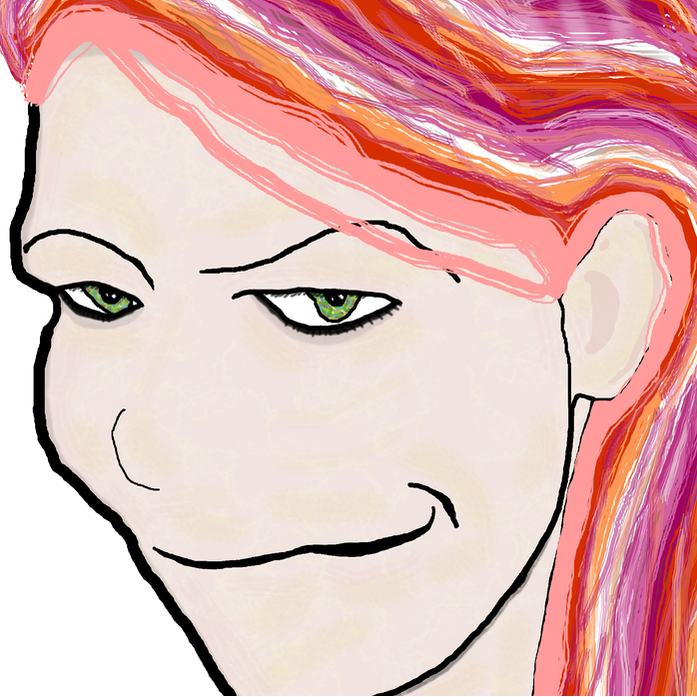
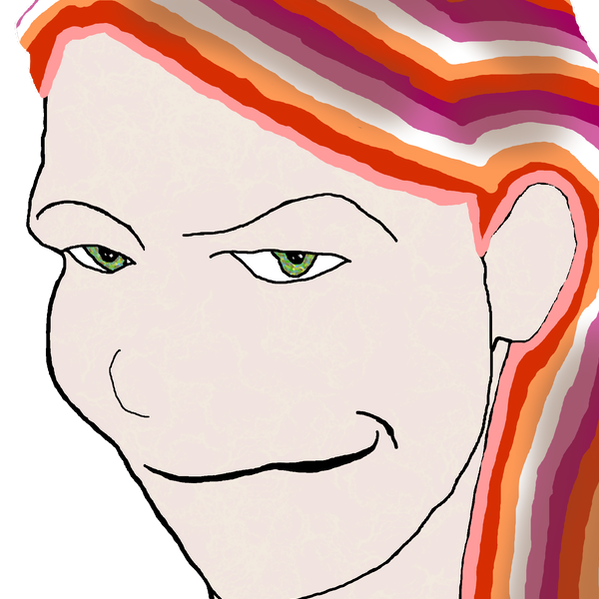
I think that I need to add some of my art on sites which I have completed, where I didn't include the updated facepalm emote, and that includes here in my blog, so here it is.
I've done a lot of work for my stream. I've created half a dozen clips, and even uploaded a couple of them.
I've created two workable backgrounds for stream--neither are great, both aren't what I want them to be, but they're slightly more visually interesting than the black nothingness backgrounds I had before, and moving the text from the bg into the stream software leaves a lot of room for flexibility.
I spent time to set up a Cara account and will be testing the blog function there with...well, with this entry! Not all sites are built to have mirrors, I'm pretty much dropping the YT one because it's not built for it, it's more built for social media style posts (where I may add it into the rotation).
I am feeling a little burnt out and uninspired on the emote front--can't finish the hug emote, not feeling like redoing the wave emote, not feeling like doing a shrug emote, etc.
I think that I need to add some of my art on sites which I have completed, where I didn't include the updated facepalm emote, and that includes here in my blog, so here it is.

rBree2FacePalm v2
I don't really have much in the way of art to show of since then, that was finished a few weeks back and I just never shared it, blogged about it, etc.
But, yeah, for those who are seeing this, I figured that I'd share another about me, where to find me, what I am doing, etc.
I'm Brianna Danielle Lewis, or Bree, for short.
I'm The Range of Bree System, because we're plural.
We are a polyfragmented median system.
I am a transwoman lesbian.
The body has autism and ADHD, so all of us do, too.
We have bipolar disorder, and suffer from crippling anxieties.
We are an Aquatics Lead (speaking of which, need to update our LinkedIn with that update), which is the new name for Lead Lifeguard, with expanded roles but not extended pay (they gave that prior although their idea of "extra generous" is...a little out of touch. In my personal opinion, the number of extra duties is worth more than the $3 increase in pay).
We are 30 going on 31, are engaged to the love of our life, have an apartment as of the end of last year, and are just beginning to find our way in life. We're in desperate need of therapy, but what we want to do with our life:
Basically be therapy for others.
Not as a profession, mind you, although technically speaking if we wanted to, we have a degree already (mechanical engineering, we almost went into CAD as a career but opted out because we need to move around), but as a kinda life goal, to make a difference in the lives of others by being someone who can help them.
I want to give them advice that makes a difference in their lives. I want to help them. I want to leave a meaningful impact in their lives, to give them things they won't forget. To be a source of positive change that helps drive their lives forward, in a positive way. To Bree a Breeacon of light, and spread my joy and positivity to all who I can touch.
Above all else, I want to vibe with friends. To be there for them. To support them. To prop them up. To make them laugh. To hug them in trying times, and celebrate all of their successes. I want to live a life where I am doing that to all I consider special in my life, and then some. Where I can give that community, that connection, to total strangers and build a place of lifelong differences.
I can obviously do more. I'd love to share the worlds I have built with others. For others to see the wondrous ideas I have in my head. For me to have that level of reach that my ideas take on a life of their own where others want to make my world be theirs, where people want to leave their own stamp on my ideas.
But those are a luxury compared to my first priority. My friends, my communities.
I am a baby witch, just growing into my spirituality. I've recently strengthened my lifelong connection to Hermes, and am beginning to do similar for my lifelong connection to Bastet.
I am a twitch streamer. Currently, my schedule (which is subject to change as life does) is twice a week, usually:
Monday + Wednesday,
At loosely 3 pm Pacific for ~2 hours (give or take).
I used to stream lots of TFT, but have stopped since Riot made their basically-a-virus anticheat mandatory. I peaked at Platinum 3.
I mostly stream JRPGs (or JRPG-styled games) like Chrono Trigger and Final Fantasy VII (not to mention Epic Battle Fantasy 5),
Minecraft,
Stardew Valley,
Art,
Miscellaneous Just Chatting streams (from working on my blog to documenting my plurality),
And my Writing of my novel.
I create poetry and songs frequently, and am looking to constantly better my streams and community.
I am known in most places as rBree2.
Here's where you can find me.
I'm writing this blog on weebly, where it will be mirrored to the other sites I post on. All Too Human is the original blog, as that was a name I thought up ten years ago to describe me and my experiences. (And in hindsight, it was the perfect representation of me. Just...human.)
I post a lot of my random thoughts on my main Twitter, which is a blog-lite.
I also have an alt-account Twitter, where we usually are documenting plurality stuff.
My streams are done on twitch on twitch dot television slash rBree2.
I upload my vods, shorts, clips, and hopefully will be branching into content creation, all onto my one YouTube channel, Bree's Video Range.
I put my shortform content onto TikTok, where I sadly couldn't get rBree2 but did get rbreelewis2.
I plan on eventually uploading edited versions of my videos as well as my art to my Instagram.
I've taken to creating spontaneous rambles as provided by the algorithm timeline on my Threads account.
I may eventually create paid content for my Ko-Fi which currently is a free mirror of the majority of my content both blogs and social media posts.
I don't use them for anything unique, but I do have a Mastodon and a Bluesky for mirroring my social media content.
I have a community discord (not going to give the link here), and my discord username is rBree2, as well as a reddit for my content creation (currently mostly my clips).
If you want to find me on steam, just look for rbree2.
If you want to gift me something, I do have a throne.
And finally, for these blogs elsewhere, you can also find them mirrored onto wix.
I also post them to my reddit profile.
I'm exploring posting them to Cara. (Although it's looking like I can't, which...oh well, I guess.)
So, that's me in a nutshell. Thank you for your time. Hope this was worth it for you. And if not, then I will do what I can to make it so in the future. Thank you for bearing with me. <3
But, yeah, for those who are seeing this, I figured that I'd share another about me, where to find me, what I am doing, etc.
I'm Brianna Danielle Lewis, or Bree, for short.
I'm The Range of Bree System, because we're plural.
We are a polyfragmented median system.
I am a transwoman lesbian.
The body has autism and ADHD, so all of us do, too.
We have bipolar disorder, and suffer from crippling anxieties.
We are an Aquatics Lead (speaking of which, need to update our LinkedIn with that update), which is the new name for Lead Lifeguard, with expanded roles but not extended pay (they gave that prior although their idea of "extra generous" is...a little out of touch. In my personal opinion, the number of extra duties is worth more than the $3 increase in pay).
We are 30 going on 31, are engaged to the love of our life, have an apartment as of the end of last year, and are just beginning to find our way in life. We're in desperate need of therapy, but what we want to do with our life:
Basically be therapy for others.
Not as a profession, mind you, although technically speaking if we wanted to, we have a degree already (mechanical engineering, we almost went into CAD as a career but opted out because we need to move around), but as a kinda life goal, to make a difference in the lives of others by being someone who can help them.
I want to give them advice that makes a difference in their lives. I want to help them. I want to leave a meaningful impact in their lives, to give them things they won't forget. To be a source of positive change that helps drive their lives forward, in a positive way. To Bree a Breeacon of light, and spread my joy and positivity to all who I can touch.
Above all else, I want to vibe with friends. To be there for them. To support them. To prop them up. To make them laugh. To hug them in trying times, and celebrate all of their successes. I want to live a life where I am doing that to all I consider special in my life, and then some. Where I can give that community, that connection, to total strangers and build a place of lifelong differences.
I can obviously do more. I'd love to share the worlds I have built with others. For others to see the wondrous ideas I have in my head. For me to have that level of reach that my ideas take on a life of their own where others want to make my world be theirs, where people want to leave their own stamp on my ideas.
But those are a luxury compared to my first priority. My friends, my communities.
I am a baby witch, just growing into my spirituality. I've recently strengthened my lifelong connection to Hermes, and am beginning to do similar for my lifelong connection to Bastet.
I am a twitch streamer. Currently, my schedule (which is subject to change as life does) is twice a week, usually:
Monday + Wednesday,
At loosely 3 pm Pacific for ~2 hours (give or take).
I used to stream lots of TFT, but have stopped since Riot made their basically-a-virus anticheat mandatory. I peaked at Platinum 3.
I mostly stream JRPGs (or JRPG-styled games) like Chrono Trigger and Final Fantasy VII (not to mention Epic Battle Fantasy 5),
Minecraft,
Stardew Valley,
Art,
Miscellaneous Just Chatting streams (from working on my blog to documenting my plurality),
And my Writing of my novel.
I create poetry and songs frequently, and am looking to constantly better my streams and community.
I am known in most places as rBree2.
Here's where you can find me.
I'm writing this blog on weebly, where it will be mirrored to the other sites I post on. All Too Human is the original blog, as that was a name I thought up ten years ago to describe me and my experiences. (And in hindsight, it was the perfect representation of me. Just...human.)
I post a lot of my random thoughts on my main Twitter, which is a blog-lite.
I also have an alt-account Twitter, where we usually are documenting plurality stuff.
My streams are done on twitch on twitch dot television slash rBree2.
I upload my vods, shorts, clips, and hopefully will be branching into content creation, all onto my one YouTube channel, Bree's Video Range.
I put my shortform content onto TikTok, where I sadly couldn't get rBree2 but did get rbreelewis2.
I plan on eventually uploading edited versions of my videos as well as my art to my Instagram.
I've taken to creating spontaneous rambles as provided by the algorithm timeline on my Threads account.
I may eventually create paid content for my Ko-Fi which currently is a free mirror of the majority of my content both blogs and social media posts.
I don't use them for anything unique, but I do have a Mastodon and a Bluesky for mirroring my social media content.
I have a community discord (not going to give the link here), and my discord username is rBree2, as well as a reddit for my content creation (currently mostly my clips).
If you want to find me on steam, just look for rbree2.
If you want to gift me something, I do have a throne.
And finally, for these blogs elsewhere, you can also find them mirrored onto wix.
I also post them to my reddit profile.
I'm exploring posting them to Cara. (Although it's looking like I can't, which...oh well, I guess.)
So, that's me in a nutshell. Thank you for your time. Hope this was worth it for you. And if not, then I will do what I can to make it so in the future. Thank you for bearing with me. <3
 RSS Feed
